
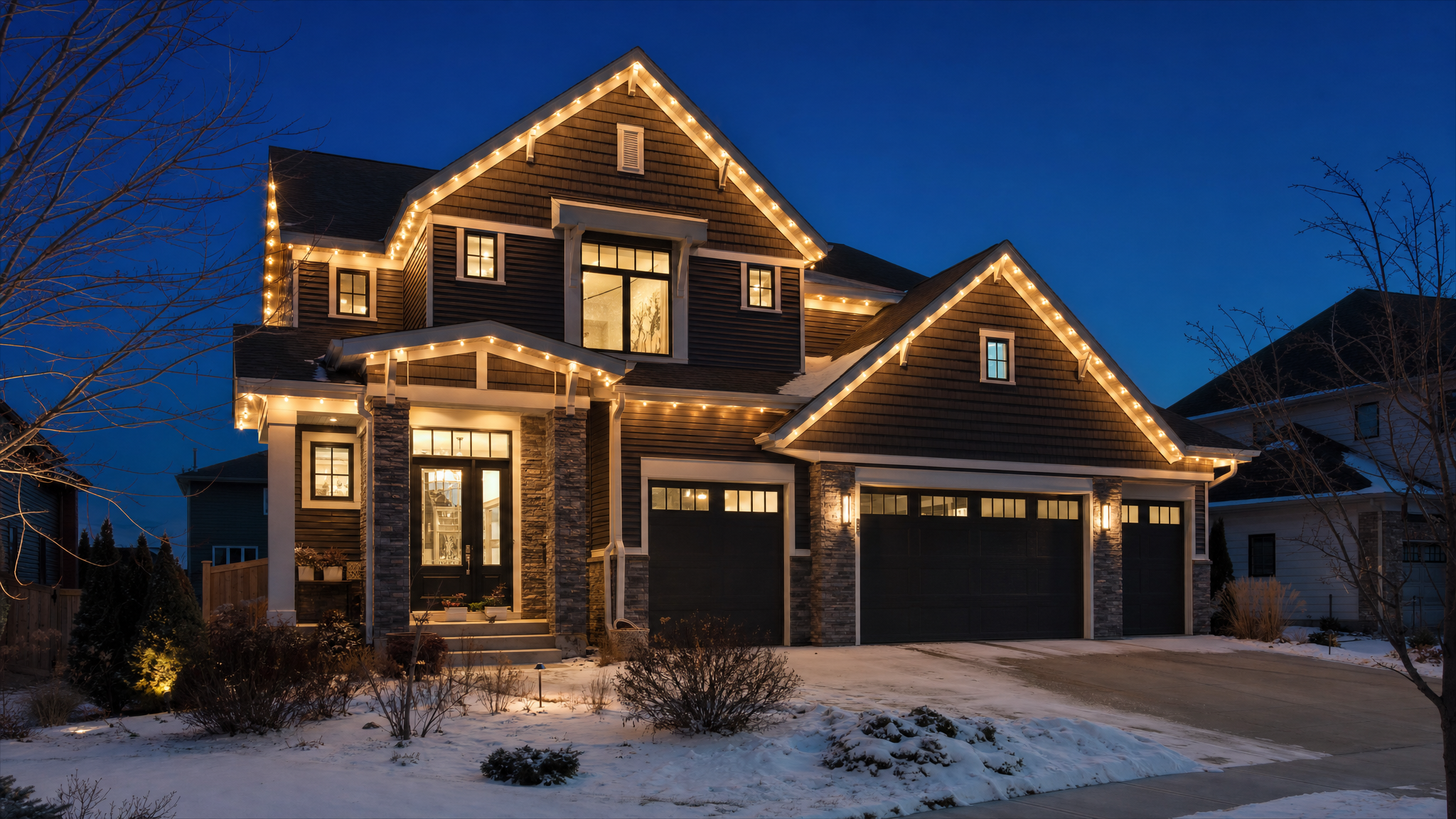
Many HOAs are still figuring out how to handle permanent outdoor lighting. The technology is newer than the typical HOA covenants, the programming flexibility raises questions that the covenants did not anticipate, and the visual character by day and at night both require some board education before approval. The franchise crew has navigated dozens of HOA approval processes and developed a framework that works.
Why HOA approval is the first step
HOA covenants typically require board or architectural review committee approval for any exterior modification to a property. Permanent outdoor lighting is a physical install into the soffit, which qualifies as an exterior modification under most covenant language.
Installing without approval creates the risk of a post install dispute. The HOA can require removal, charge fines, or in extreme cases take legal action. The risk is small in most cases but real enough that the franchise crew always advises pursuing approval before install.
The approval process also benefits the homeowner. A documented approval protects the install from future board challenges, becomes part of the property record for any future sale, and establishes the programming guidelines that govern the operation of the system.
The standard board approval submission
The franchise crew produces a standard submission package for HOA approval. The package includes the install specification, the mounting method, the channel material and finish, the bulb spec, the warranty terms, and the proposed operating guidelines.
The submission also includes photos from similar installs in similar architectural styles. The photos help the board understand the day time appearance, the evening programming flexibility, and the typical use patterns. Most boards respond positively to seeing actual installed properties rather than theoretical specifications.
The submission typically runs three to five pages and is designed for review by a board without technical lighting expertise. The franchise crew has refined the submission language across many approval cycles to address the typical questions and concerns directly.
The day time appearance question
The most common board concern is the day time appearance of the install. Boards worry that the channel mount will look like a visible lighting fixture and detract from the architectural character of the property.
The submission addresses this concern with photos showing the day time appearance of installed properties. The channel mount sits flush with the soffit edge, painted to match the soffit color, with the bulbs recessed into the channel. From street level the system reads as a clean architectural detail rather than as a lighting fixture.
Most boards accept the day time appearance after reviewing the photos. Some boards request a sample install in a low visibility location on the property before approving the full install. The franchise crew supports either approach.
The evening programming question
The second most common board concern is the evening programming flexibility. Boards worry that the system will run aggressive color combinations outside the holiday window or display patterns that conflict with the community aesthetic.
The submission addresses this concern with proposed operating guidelines. The standard guidelines specify warm white operation during non holiday periods, traditional Christmas colors during the December window, and limited color programming for specific events like Independence Day or family milestones.
The operating guidelines become part of the approval condition. The homeowner agrees to operate the system within the guidelines, and the HOA accepts the install on that basis. The agreement gives the board comfort that the system will not be misused, and gives the homeowner the certainty that the install is approved within the agreed scope.
The HOA entrance installation
Many HOAs install permanent outdoor lighting at the community entrance as a community amenity. The entrance install is approved at the board level rather than as an individual property modification, and the system runs as a shared community asset.
HOA entrance installs typically cover the entrance monument, the gate house, the community sign, and any decorative landscape lighting near the entrance. The board approves the install scope, the programming guidelines, and the ongoing operation as part of the community amenity package.
The community install often shifts the dynamic for individual property installs. Once the HOA itself runs permanent outdoor lighting at the entrance, individual properties typically face an easier approval path for their own installs. The technology becomes familiar to the board, the operating guidelines are established, and the community aesthetic accommodates the technology.
How boards approach reserve funding
For HOA installs, the board needs to handle the upfront install cost and the ongoing maintenance through the community reserve. The franchise crew produces a reserve funding analysis that covers the install cost, the warranty period, the expected service life, and the typical maintenance cost beyond warranty.
The reserve analysis fits the standard HOA reserve study format. Most management companies can integrate the lighting analysis into the broader reserve study without significant additional work. The franchise crew supports the integration as part of the standard install process.
For most communities, the reserve funding is straightforward. The upfront install cost is a one time expense, the warranty period covers the first several years of service, and the ongoing maintenance beyond warranty fits the typical reserve maintenance line items.
What about retroactive HOA rules
Some HOAs have updated covenants to address permanent outdoor lighting after the technology became more common. The retroactive rules sometimes create challenges for properties that installed before the rules were enacted.
In most cases, properties installed before the rules are grandfathered under the prior covenants. The retroactive rules apply to new installs going forward. The franchise crew helps navigate the grandfathering question if it arises, with documentation of the install date and the prior approval supporting the grandfathered status.
The board education conversation
For HOAs that are new to permanent outdoor lighting, the franchise crew often offers to present at a board meeting to walk through the technology, the install standard, and the operating guidelines. The board education conversation typically covers the questions the board would have anyway, and accelerates the approval process.
Many boards appreciate the offer to present. The presentation lets the board ask questions directly, see actual product samples, and understand the install before the first individual property submission arrives. The education investment typically pays off across multiple subsequent individual approvals.
What the homeowner does
For the homeowner pursuing HOA approval, the process runs through three steps. First, the franchise crew produces the approval submission. Second, the homeowner submits the package to the HOA management company or directly to the board. Third, the board reviews the submission and either approves, requests modifications, or declines.
Most approvals come through within one to two board meeting cycles. Some HOAs handle review through the architectural review committee outside of board meetings, which can speed the process. Some HOAs require a board vote at a scheduled meeting, which can take longer depending on the meeting calendar.
The franchise crew supports the homeowner through the process. If the board requests additional information or modifications, the crew responds quickly. If the board approves, the install schedule moves forward. If the board declines, the crew helps the homeowner understand the reasons and consider whether modifications would address the concerns.
The long term HOA culture impact
HOAs that approve permanent outdoor lighting typically see the technology spread through the community over time. Once the first few installs are approved and operating, neighbors notice the system, ask the homeowners about it, and pursue their own installs. The technology becomes part of the community visual culture.
The network effect benefits the HOA as a community. The visual quality of the neighborhood improves, the property values reflect the visible improvement, and the operating guidelines ensure the technology fits the community aesthetic. The early approval investment by the board pays off over years of community improvement.