
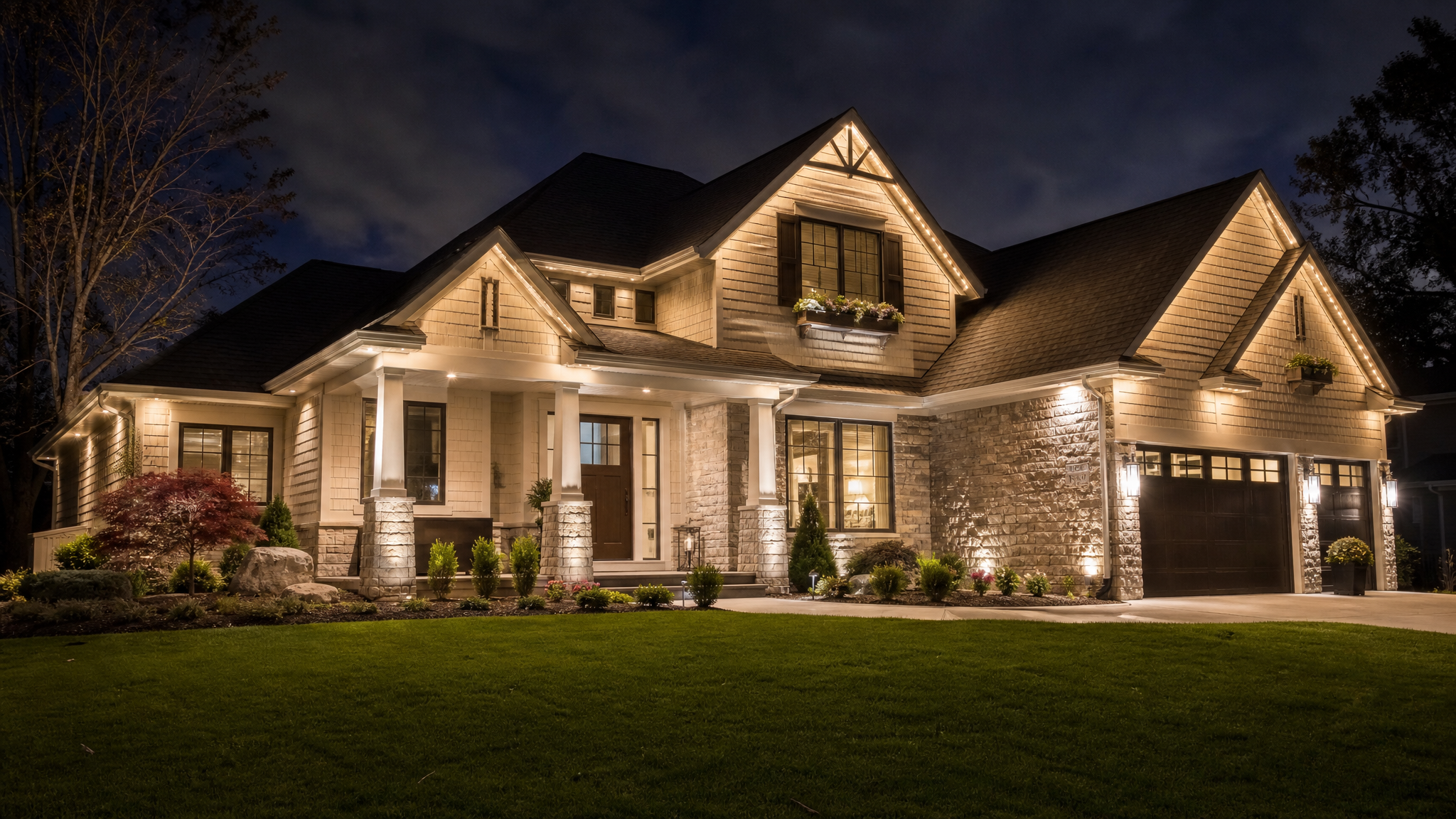
Permanent outdoor lighting is a recessed channel mounted LED system that installs into the soffit of a home or commercial property and runs programmable colors year round. The technology is engineered for 10 to 15 year service life, the system is controlled from a phone app, and the visual result by day is essentially invisible.
The physical install
The install starts with the channel mount. An aluminum or PVC channel runs along the soffit underside, secured to the structural framing with screws hidden by the channel itself. The channel is sized to receive the LED bulb assembly, with the bulb sitting recessed inside the channel rather than protruding below it.
The LED bulbs install into the channel from below, with each bulb spaced for the design pattern. Typical bulb spacing is one to two bulbs per foot of channel, depending on the saturation level the customer wants. Higher density produces a stronger visual statement, lower density produces a more refined look.
The wiring runs through the attic or the soffit cavity to a hidden control box, typically mounted in a closet, basement, or utility area inside the home. The control box connects to home wifi for programming and provides power to the LED system.
How the channel disappears by day
The channel mount is designed to be visually unobtrusive. The channel is painted to match the soffit color, the bulbs sit recessed inside the channel rather than protruding, and the only element visible from the street is the underside of the soffit with a slight architectural detail along the edge.
Most homeowners forget the system is installed during daylight hours. Visitors to the property often do not notice the lighting system at all until evening, when the bulbs light up and the architectural line becomes obvious. The day time invisibility is one of the key features that distinguishes permanent outdoor lighting from seasonal install.
The aesthetic also works for homeowners and property owners who want the option of holiday lighting without the seasonal install and takedown cycle. The system can run a soft warm white preset every evening for the entire year, which functions as ambient evening lighting that complements the architecture without making the property look decorated.
The programming
The system programs from a phone app that connects to the home wifi and the control box. The app provides a library of preset color combinations covering every major holiday and many secondary use cases. Christmas red and green, Halloween orange and purple, Independence Day red white and blue, Valentines pink and red, Saint Patricks green, and dozens of other patterns are standard presets.
The app also allows custom programs. The homeowner can select any individual bulb color, any animation pattern, and any brightness level. Sports fans typically build presets for their college and professional team colors. Families build presets for birthdays, anniversaries, and other personal events. The flexibility is the product.
The app also handles scheduling. The system can program to turn on at dusk and off at midnight every evening, with no manual operation required. The schedule can change by season, by day of week, or by specific date. Most homeowners set the schedule once and never think about it again.
The LED engineering
The LEDs themselves are engineered for outdoor performance and long service life. The bulbs are rated for tens of thousands of hours of runtime, which translates to decades of evening use at typical patterns. The diodes are spec'd for the temperature extremes the system will face in its installed climate.
Cold climate installs use LEDs rated for sub zero performance without color shift or efficiency loss. Hot climate installs use LEDs rated for triple digit summers with heat tolerant housings that protect the diode and the connection points. The franchise crew adjusts the product spec by region.
The LED color quality is consistent across the entire run. Unlike consumer string lights where bulbs from different batches sometimes show slight color variation, the channel mounted system uses LEDs from the same production run and the same calibration spec. The result is a uniform color across the entire roofline.
The control box and the network
The control box mounts in a sheltered location inside the home, typically in a closet, basement, or utility area. The box provides power to the LED system, processes the color and animation programming from the app, and handles the dimming and switching control.
The control box connects to home wifi for app programming. The wifi connection is the primary way the homeowner programs the system, with the phone app sending commands to the control box and the control box translating them to the LED hardware.
The system can also run from a physical switch as a backup. If the wifi is down or the app is unavailable, a hardwired switch can turn the system on and off in the default last used program. The physical switch is a backup, with the app being the primary interface.
The warranty terms
Quality permanent outdoor lighting systems carry a manufacturer warranty on the bulbs and the channel system, typically running five to ten years. The manufacturer warranty covers any failure under normal use during the warranty period.
The install workmanship is covered by the franchise crew warranty, typically running one to three years. The install warranty covers any issue with the install itself, including channel separation, wire routing failures, or control box install problems.
The two warranties together provide multi year coverage on the most likely failure points. Many franchises also offer an extended service plan that covers maintenance, programming updates, and any issue outside the standard warranty terms.
What this means in practice
The permanent outdoor lighting install is a multi day project that installs a property asset with a 10 to 15 year service life. The system is visually unobtrusive by day, programs to any color combination from a phone app, and replaces the annual install and takedown cycle of seasonal holiday lighting with a property asset that runs every season of the year.
The technology is engineered to disappear when the homeowner does not want lighting and to deliver any pattern when the homeowner does. The flexibility is the product, and the long service life is what makes the upfront install cost economic over the multi year horizon.