
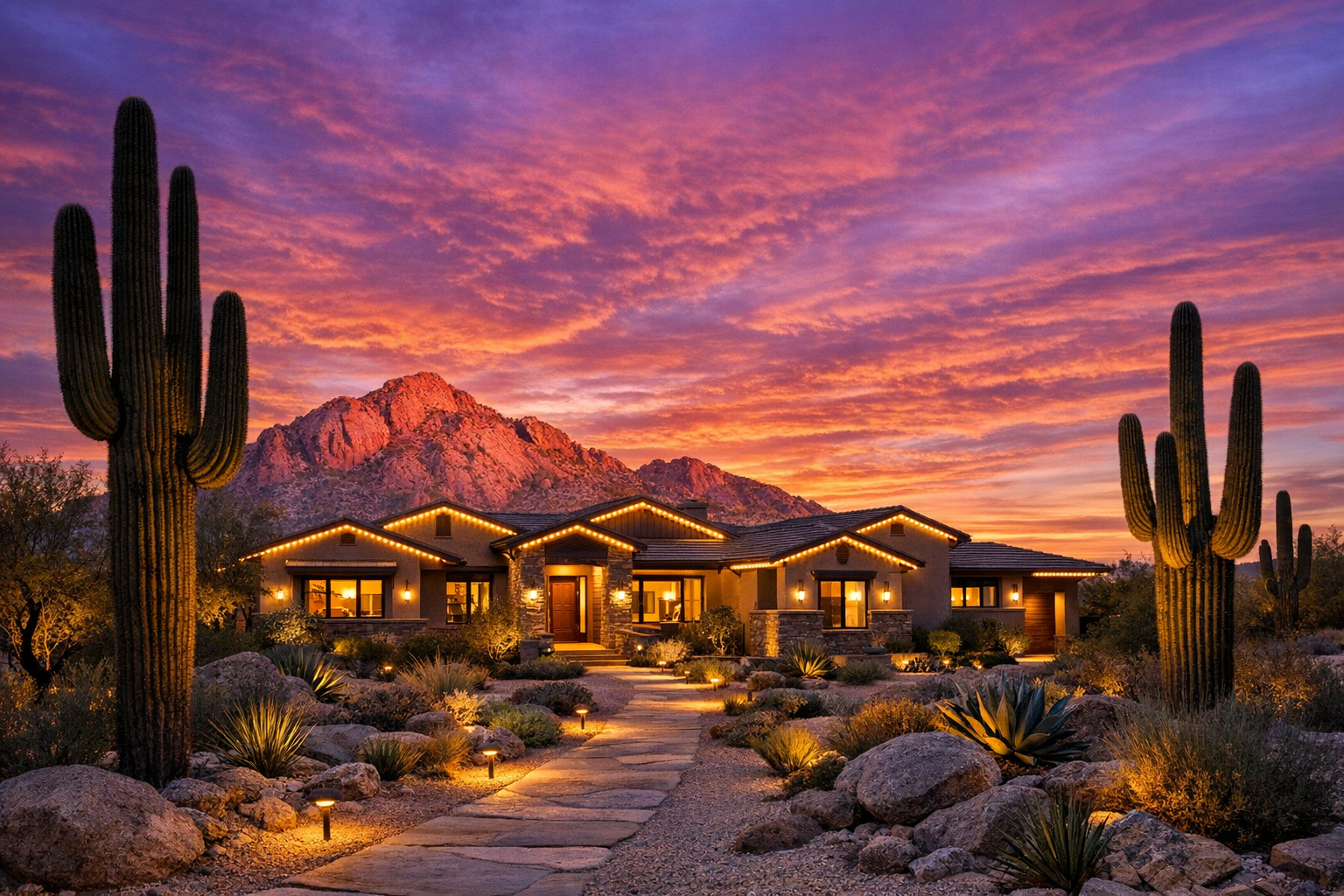
Permanent outdoor lighting cost is driven by linear footage, complexity, bulb density, control box specification, and any custom programming work. The price scales with the install scope, with most residential installs falling in a specific range and most commercial installs falling in a higher range based on scale.
The five variables that drive the budget
Linear footage of channel mount is the single biggest factor. A typical single story home with a simple roofline might require 80 to 120 linear feet of channel. A two story colonial typically runs 150 to 250 linear feet. An estate property with multi gable rooflines and decorative trim can run 400 to 800 linear feet or more. The price scales roughly linearly with the footage.
Complexity adjusts the linear footage cost. A simple two gable roofline runs at the standard rate. A multi gable roofline with dormers, decorative facades, and tight corners runs at a premium because the install labor and the channel cutting take more time. A historic property with mounting constraints adds further complexity.
Bulb density determines how many LED bulbs are installed in the channel. Standard density is one to two bulbs per foot. Higher density produces a more saturated look and uses more bulbs. The bulb cost is one of the major hardware line items.
Control box specification depends on the system size. A smaller residential install can run on a single control box. Larger residential installs and most commercial installs require multiple control boxes that coordinate across zones. The control box hardware and the install labor scale with the system size.
Custom programming is typically included in the install. Standard presets for major holidays come with the system. Custom programs for specific use cases like team colors, family events, or community campaigns are typically a quick app configuration rather than a separate cost.
Typical price ranges by property scale
Residential installs on smaller homes with simple rooflines fall in a moderate range. The install includes the channel, the LED bulbs, the control box, the install labor, the wiring, the app setup, and the warranty.
Residential installs on larger homes with more complex rooflines fall in a higher range. The additional cost reflects the additional footage, the additional bulbs, and the additional install labor.
Commercial installs scale based on the property size and the number of buildings or facades. A small standalone commercial property may fall in a similar range to a large residential install. A multi building corporate campus, a large retail center, or an extensive HOA entrance program runs substantially higher.
The specific number depends on the property review. The franchise crew quotes the install based on the actual scope of the property, not a fixed per square foot rate.
How the cost compares to seasonal holiday lighting
Permanent outdoor lighting has a higher upfront cost than seasonal holiday lighting. The single year cost of a permanent install typically exceeds five to ten years of seasonal install cost combined.
The multi year economics flip the comparison. A permanent install with a 15 to 20 year service life replaces 15 to 20 years of seasonal install cost. Over the full service life, the permanent install typically delivers lower total cost than the equivalent multi year seasonal program, with the additional benefit of year round programming flexibility.
Most homeowners who install permanent outdoor lighting cite the year round flexibility as the primary value driver. The cost economics are typically a secondary consideration, with the convenience of never running another seasonal install or takedown being the most important benefit.
What the install scope typically includes
The standard install scope includes site survey and design. The crew walks the property, measures the channel footage, identifies the wire routing path, and confirms the control box location. The design step produces the install plan and the final scope estimate.
The install scope also includes channel install and bulb install. The crew mounts the channel along the soffit, runs the wiring through the attic or the soffit cavity, installs the control box in the agreed location, and seats every LED bulb in the channel at the design spacing.
The install includes commissioning and customer training. The crew tests every preset, confirms the app connection, walks the homeowner through the programming interface, and confirms the system works as expected. The customer training typically runs 30 to 60 minutes and covers the basics of using the app.
The install includes the warranty documentation. The manufacturer warranty terms and the install warranty terms are provided in writing, with the customer keeping a copy for reference.
What is typically not included
Custom programs beyond the standard preset library are typically included as part of the customer training. The homeowner can build any custom program in the app without additional cost.
Electrical service modifications, panel upgrades, or new circuit installation are not typically included in the standard install. Most permanent outdoor lighting systems run from existing circuits, but properties that need electrical work to support the install typically pay an electrician separately.
Network and wifi extension work is not typically included. The system needs a wifi signal at the control box location. If the property requires a wifi extender or a mesh network upgrade to reach the control box, the homeowner typically arranges that separately.
Multi year service plans
Many franchises offer an extended service plan that covers system maintenance, programming updates, and any issue outside the standard warranty terms. The service plan typically runs as an annual fee that covers a defined scope of service.
The service plan handles ongoing technical support, any in person service call needed during the warranty period or beyond, and the year over year programming updates as the customer adds new preset use cases. The plan typically lets the customer treat the system as a managed service rather than as a maintenance burden.
How commercial properties price differently
Commercial properties typically pay differently than residential. The install includes the standard hardware and labor, plus property management coordination, lease compliance documentation, and after hours work scheduling. The additional coordination adds to the install cost.
Commercial properties also typically require multiple control boxes, zoned programming, and more extensive wire routing. A retail center with multiple tenant facades, an office park with multiple buildings, or an HOA with multiple entrance monuments all run at scaled prices that reflect the larger system.
Commercial installs often pay through a multi year service contract that includes the install, the warranty period, and the extended service plan as a single package. The multi year contract simplifies budget planning and makes the property asset valuation more predictable.
What to ask in the quote conversation
The quote conversation should cover the property review, the channel footage estimate, the bulb density preference, the control box location, the wire routing plan, and the timing window for install. The franchise crew handles all of these as part of the standard quote process.
The conversation should also cover the warranty terms, the extended service plan options, and any custom programming the customer wants to set up at install. The crew walks the customer through each item and produces a final quote that covers the full install scope.
The final quote is the right place to compare the upfront cost against the multi year economics. The franchise crew can produce a multi year comparison against seasonal install cost so the customer can make the economic decision with the full picture.