
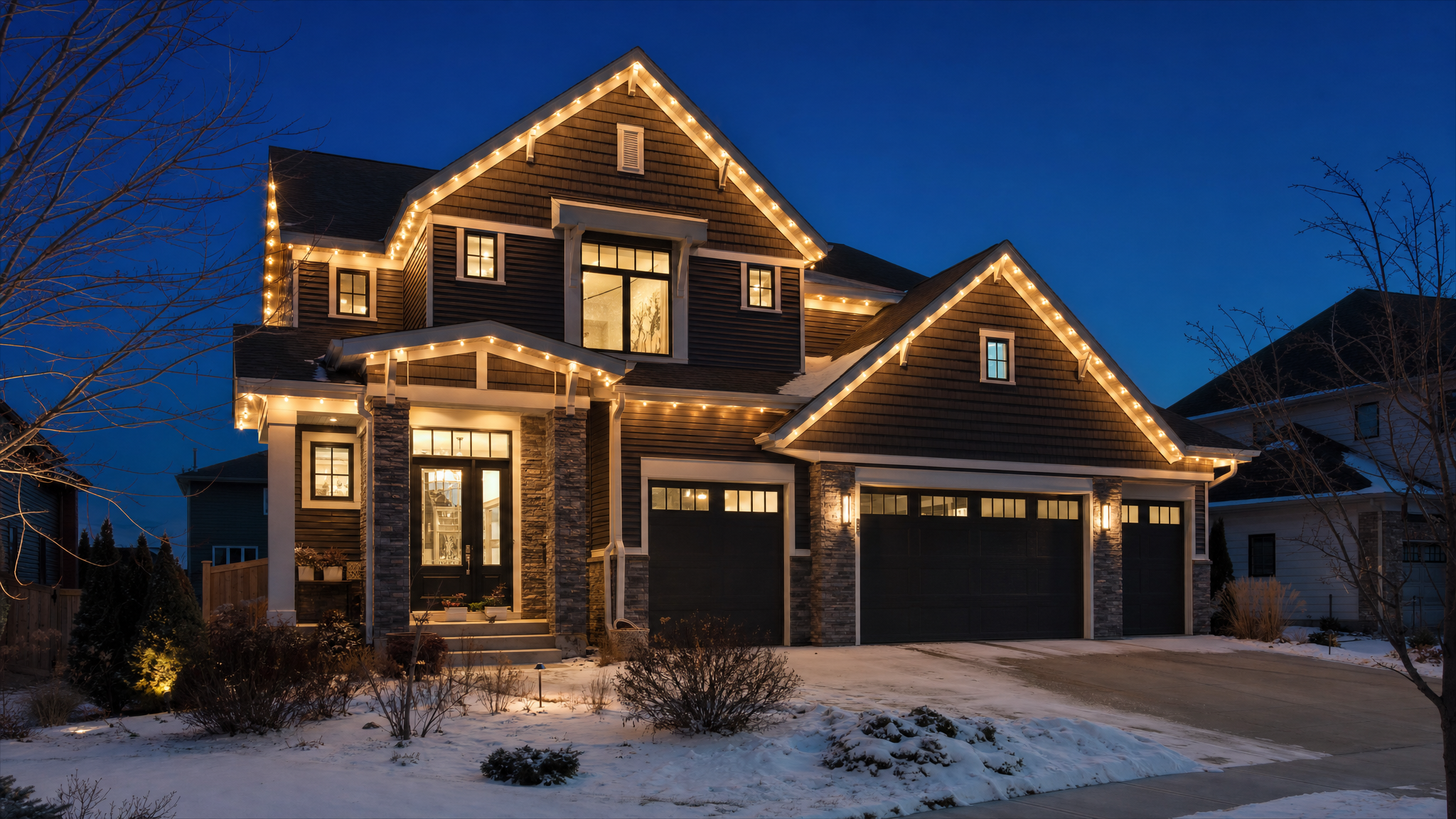
Quality permanent outdoor lighting systems are engineered for 10 to 15 year service life. The LED bulbs themselves are rated for tens of thousands of hours of runtime. The channel mount system is built for multi decade outdoor exposure. The control box is engineered for long term reliability with periodic firmware updates.
What drives the service life
The single biggest factor in service life is LED quality. Commercial grade LEDs from established manufacturers are rated for 50,000 to 100,000 hours of operation. At typical use patterns of three to six hours per evening across an average year, that translates to 25 to 50 years of theoretical service life. The practical service life is shorter because of secondary factors, but the LED itself is engineered for decades.
The channel mount material quality is the second factor. Aluminum channels with corrosion resistant coatings last longer than basic PVC. The channel attachment to the soffit framing has to handle thermal expansion and contraction over years of seasonal temperature change. Quality channels are engineered to flex without fatigue.
The wiring and connector quality is the third factor. The wire insulation has to handle outdoor temperature extremes, UV exposure, and any moisture infiltration around the soffit. The connectors between channel sections have to seat and reseat over years without losing electrical contact. Quality wiring uses heavy gauge conductor with UV resistant insulation rated for outdoor service.
The control box quality and the firmware support are the fourth factor. The control box electronics have to run for years without failure. The firmware has to be updated periodically to fix bugs, add features, and maintain compatibility with phone app updates. Established manufacturers maintain firmware support across the warranty period.
What can shorten the service life
Cheap LEDs from low tier manufacturers can fail within five to ten years rather than lasting the full 10 to 15 year target. The visible symptom is color shift, where the bulb that was warm white at install starts to look greenish or bluish as the LED diode degrades. The Lighting Partners franchise network uses commercial grade LEDs from established manufacturers to avoid this issue.
Channel mounts that use low cost plastic instead of aluminum can become brittle over time, especially in cold climates with freeze thaw cycles. The brittle channel can crack and detach from the soffit, requiring repair or replacement. Quality aluminum channels avoid the brittle failure mode.
Wire connectors that are not sealed against moisture can corrode over time, especially in coastal or humid climates. The corroded connection causes intermittent failures that look like random bulb outages but are actually contact failures. Quality sealed connectors avoid this issue.
Control boxes installed in unconditioned spaces like garages or basements with temperature swings can fail faster than control boxes installed in conditioned living space. The franchise crew typically recommends installing the control box in a closet or utility area inside the conditioned envelope of the home.
What the warranty covers
The product warranty from the manufacturer typically covers the LEDs and the channel system for five to ten years. The warranty covers any failure under normal use, with the manufacturer providing replacement bulbs or channels as needed. The franchise crew handles the warranty service directly with the manufacturer.
The install warranty from the franchise crew typically covers the install workmanship for one to three years. The install warranty handles any issue with the install itself, including channel detachment, wire routing failures, or control box install problems.
The two warranties together provide coverage on the most likely failure points during the early years of operation. After the warranty period, repairs and replacements run on a service call basis, typically at modest rates because the underlying components are commodity LED hardware.
How service calls work
For systems still under warranty, the franchise crew handles service calls at no charge for any covered issue. The crew diagnoses the problem on site, replaces the failed component under the manufacturer warranty terms, and confirms the system is working before leaving.
For systems beyond the warranty period, service calls run on a typical hourly rate plus parts. Most service calls involve replacing a failed bulb or repairing a wire connector, which are quick and inexpensive repairs. Major component failures like channel detachment or control box failure are rarer and more expensive.
Many franchises offer an extended service plan that covers service calls beyond the warranty period at a flat annual rate. The plan effectively converts the service call cost into a managed expense, which some commercial property owners prefer for budget predictability.
What service typically looks like in years 1 through 25
Years 1 through 3 typically see no service calls beyond any warranty issues that surface in the first year. The system runs as installed, the firmware updates happen automatically, and the homeowner uses the app to program the system.
Years 4 through 10 typically see occasional bulb replacement. The LED diodes are rated for the long term, but occasional individual bulb failures happen across any large LED installation. The franchise crew replaces the failed bulbs as needed, typically as part of an annual service visit.
Years 11 through 20 typically see more frequent bulb replacement and possibly some connector or control box service. The major components are still functional, but the wear and tear of multi decade outdoor service accumulates. Most systems still run well at year 20 with reasonable maintenance.
Years 21 through 25 typically see major component refresh. The LEDs and the channel may still be functional, but the control box, the wiring, and the firmware compatibility may reach end of life. Many homeowners choose to refresh the system at year 20 to 25 with current generation hardware, which extends the property asset life for another two decades.
The economic case across the service life
The 10 to 15 year service life is what makes the upfront permanent outdoor lighting cost economic over the long horizon. A system that runs for 20 years at the installed price effectively replaces 20 annual seasonal install cycles. The cumulative seasonal install cost over 20 years typically exceeds the upfront permanent install cost by a significant margin.
The economic case also includes the property value impact. A permanent outdoor lighting system installed in the home is often viewed as a positive property feature, similar to a kitchen renovation or a deck. The system is documented as a property improvement, transfers to a new owner if the home sells, and continues to deliver value across ownership transitions.
What this means for the homeowner decision
The 10 to 15 year service life is the foundation of the value proposition. Most homeowners do not need a system that lasts more than 15 to 20 years because property ownership patterns shift, technology evolves, and the next generation of LED lighting will offer new capabilities. The current generation system is engineered to deliver consistent service for the full window the homeowner will reasonably use it.
For homeowners thinking about the long term economics, the multi year cost comparison against seasonal install is typically the deciding factor. The franchise crew can produce the comparison at the quote review, with the specific numbers based on the property scope and the regional install rates.