
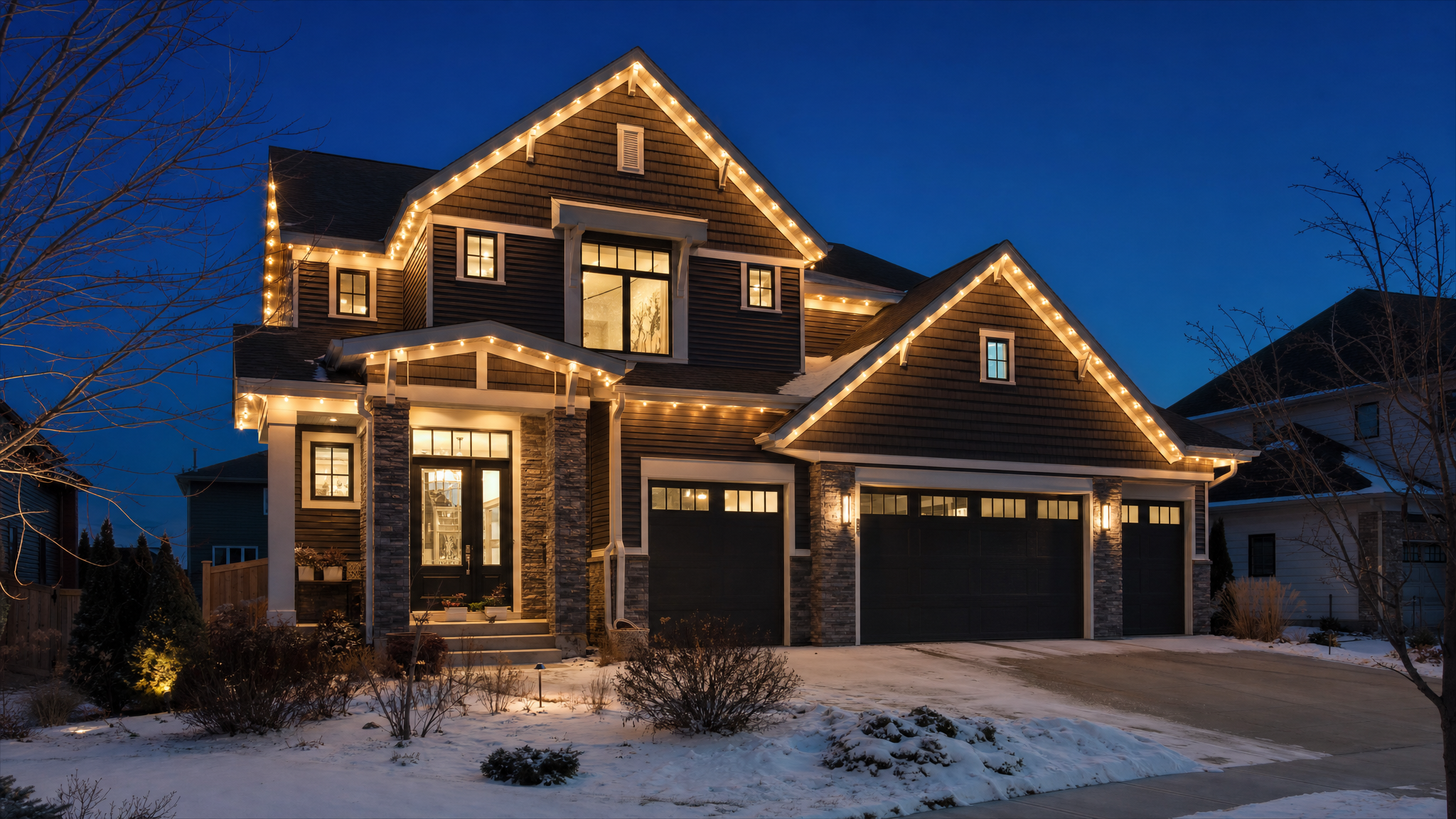
Permanent outdoor lighting on historic homes requires non destructive mounting that protects original brick, stone, and woodwork. The mounting approach is the key technical differentiator for historic installs, and the franchise crew has developed methods that satisfy historic commission review across the country.
Why historic homes need special install methods
Historic homes carry materials and finishes that are irreplaceable. Original brick from the 1800s, hand carved woodwork, slate roofing, copper gutters, and decorative architectural details all have value that exceeds the cost of replacement. Any install that damages these materials reduces the property value, may trigger historic commission enforcement, and runs against the standard duty of care for historic property ownership.
The standard residential install methods that work on modern homes do not always work on historic homes. Clips designed to attach to vinyl gutters may not fit copper gutters. Mounting screws that work in modern soffit material may damage the original wood. Wire routing through modern attic spaces may not be available in historic homes with finished attics or no attic at all.
The franchise crew adjusts the install method by property. Historic district installs use specific clips, mounting techniques, and wire routing approaches that protect the original materials while delivering the same visual result as a modern home install.
The mounting approach for historic homes
The primary mounting approach for historic homes uses the channel system mounted to the existing soffit framing rather than directly to original brick or stone. The channel attaches to the soffit framing with screws hidden by the channel itself, and the channel runs flush with the soffit edge without protruding below it.
For historic homes with original soffit material, the install uses non destructive fastening that does not pierce the original wood. The franchise crew typically uses a clamp mount, an adhesive backed mount, or a fastener that drives through existing nail holes from the original construction. The choice depends on the specific property and the recommendation of the historic commission.
For historic homes without modern soffit construction, the install uses an alternative mounting plan that attaches the channel to the roof framing or the wall framing without piercing the original materials. The crew develops the mounting plan in coordination with the property owner and the historic commission before the install.
Wire routing in historic homes
Wire routing in historic homes often requires creative solutions. Modern homes have attic spaces or wall cavities that accommodate the wiring run from the channel to the control box. Historic homes often do not have the same access, and the routing has to follow existing utility paths or surface mount along architectural details that hide the wire.
For homes with finished attics or no attic, the wire often runs through existing electrical conduit, along the back side of decorative trim, or through hidden channels behind soffit returns. The crew identifies the routing at the property survey and confirms the plan with the property owner before the install.
The control box location is also more constrained in historic homes. Modern homes typically have a utility closet or a basement that accommodates the control box. Historic homes may not have the same space, and the control box installs in a discreet location that does not affect the historic interior. The crew works with the property owner on the location.
Historic commission coordination
Most historic districts require commission approval for any exterior modification to a historic property. The approval process varies by district but typically involves submitting the install plan, the mounting method, and the visual specification to the commission for review.
The franchise crew has installed across enough historic properties to know which commissions require which documentation. The standard submission includes drawings of the channel mount, photos of similar installs on historic properties, the mounting method specification, and the operating program for the system.
Most commissions approve the install after reviewing the submission. The non destructive mounting and the day time invisibility of the channel system address the primary concerns. The crew handles the submission process as part of the standard install for any historic district property.
What the day time appearance is
The day time appearance is one of the key features that makes permanent outdoor lighting appropriate for historic homes. The channel mount sits flush with the soffit edge, painted to match the soffit color, with the bulbs recessed into the channel rather than protruding below.
From street level, the installed system reads as a clean architectural detail along the soffit edge rather than as a lighting installation. Visitors to the property often do not notice the system at all until evening, when the bulbs light up and the architectural line becomes obvious.
The day time invisibility is the feature that distinguishes permanent outdoor lighting from any other lighting product for historic homes. Most other lighting installations include visible fixtures, exposed wiring, or attached mounting hardware that draws the eye even when the lights are off. Permanent outdoor lighting effectively disappears by day.
The evening programming for historic homes
Many historic home owners run a soft warm white preset every evening for the everyday curb appeal. The warm white reads as ambient evening lighting that complements the historic architecture without making the property look decorated. The lighting plan respects the architectural character of the home while adding modern functionality.
For holiday programming, the warm white can switch to traditional Christmas colors during the holiday season. Many historic home owners specifically choose subdued holiday programming that respects the historic character. White lights, soft warm tones, and traditional patterns rather than aggressive multicolor combinations.
The programming flexibility means the historic home can participate in any seasonal lighting tradition without committing to a specific style. The system runs whatever pattern the owner selects, and the pattern can change by season, by year, or by event.
The economic case for historic homes
Historic home owners typically maintain their properties for the long term. The 10 to 15 year service life of permanent outdoor lighting fits the historic property ownership horizon well. The system installs once and serves the property across multiple decades of stewardship.
The economic case is also strong because seasonal install on historic homes typically costs more than seasonal install on modern homes. The historic install requires the same non destructive mounting attention, the same coordination with the historic commission, and the same careful wire routing. Spreading the historic install cost across one upfront permanent system rather than 10 to 15 annual seasonal installs delivers substantial savings.
What to ask in the quote conversation
For historic home owners considering the install, the quote conversation should cover the mounting method specification, the historic commission coordination plan, the wire routing approach, and the control box location. The franchise crew handles all of these as part of the standard quote process for historic properties.
The conversation should also cover the evening programming preference. Many historic owners want a specific aesthetic that fits the property character, and the franchise crew can produce example renders or photos from similar properties to confirm the visual direction.