
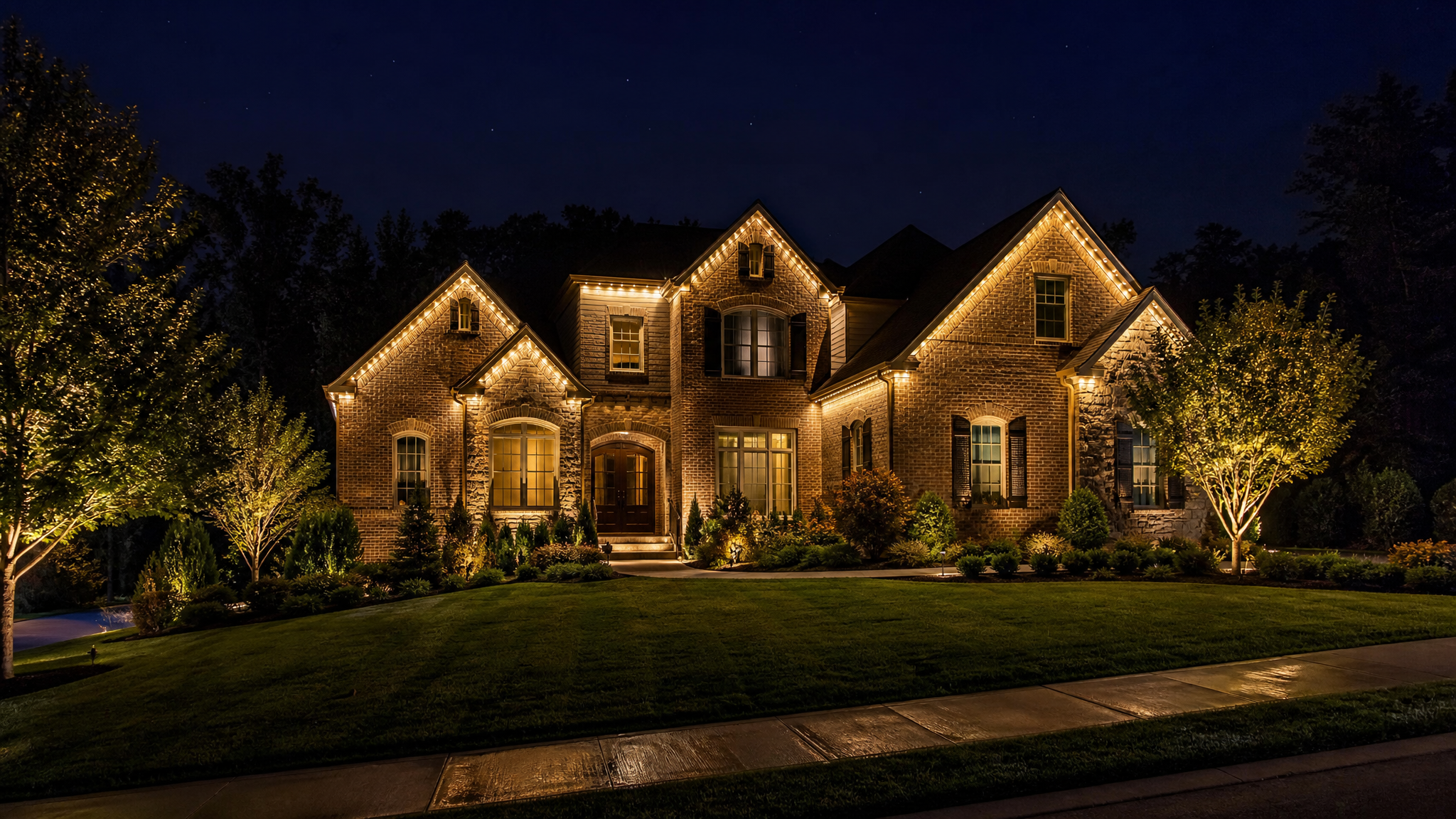
Sub zero winters do not bother quality permanent outdoor lighting systems. The product is engineered for cold weather performance, with LED diodes rated for low temperature operation, channel mounts engineered for thermal expansion and contraction, and connectors sealed against freeze thaw cycles.
What changes in cold climate spec
Cold climate installs use the same fundamental product as warm climate installs, with adjustments to specific components for low temperature performance. The LED diodes are rated for operation down to minus 20 or minus 40 degrees Fahrenheit depending on the spec. The channel mount uses aluminum rather than PVC because aluminum handles thermal cycling better. The connectors are sealed against moisture infiltration that can freeze and expand inside the connection point.
The wire insulation also runs heavier gauge in cold climate spec. The insulation has to handle repeated freeze cycles without cracking, and the heavier gauge provides additional protection against UV degradation and physical wear.
The control box typically installs in a conditioned space inside the home, which protects the electronics from extreme cold. Unheated garages, basements, and attics in extreme cold climates can affect control box performance, and the crew typically locates the control box in a closet or utility area inside the heated envelope.
The MN Lighting Squad install standard
MN Lighting Squad has installed across the Twin Cities and the western suburbs through some of the coldest winter conditions in the country. The franchise has developed install standards that handle sub zero stretches without performance issues, and the standards apply to every install in the territory.
The Minnesota install uses cold rated LEDs, aluminum channel mounts, sealed connectors, and heavy gauge wire on every job. The control box installs in a conditioned space, with the wiring routed through the attic when possible or through the soffit cavity when attic routing is not available.
The install team also pays attention to snow load on the channel mount. The channel sits flush with the soffit edge so accumulated snow on the roofline does not bear directly on the bulbs or the channel. The bulbs recess into the channel rather than protruding, which keeps them clear of snow accumulation.
The Michigan install standard
Michigan Lighting Partners runs a similar standard across the metro Detroit, Grand Rapids, and lakeshore territories. The lake effect snow off Lake Michigan and Lake Huron drives additional install attention on snow load and ice accumulation.
The Michigan crew uses extra fastening at the corner returns and the gable ends where ice tends to load on the roofline. The channel mount holds the additional weight without distorting, and the bulbs continue to operate through ice load on the roof above.
Michigan also faces extended cold weather operation. The system runs in single digit and sub zero conditions for weeks at a time during January and February. The cold weather operation does not affect the LED performance, with the bulbs running at full brightness regardless of temperature.
The Northeast Ohio and New England install standards
Northeast Ohio Lighting Partners and New England Lighting Partners face similar cold weather conditions. The lake effect snow off Lake Erie in Cleveland and the dense snow load across northern New England create the same install considerations as Minnesota and Michigan.
The install standard for these territories uses the same cold rated components and the same attention to snow load. The territories also handle coastal salt air on properties near the Lake Erie shore and the New England coast, which adds corrosion resistance to the standard cold climate spec.
What about ice dams
Ice dams form on the eaves of homes when interior heat melts snow on the roof and the melt water refreezes at the colder eave edge. Ice dams can cause water damage to the home and can affect any equipment mounted along the eave line, including permanent outdoor lighting channels.
The channel mount approach typically handles ice dam conditions without damage. The channel sits at the soffit edge below the eave, which is below the ice dam formation zone in most cases. The bulbs recess into the channel and continue to operate even when ice dam conditions are present on the roof above.
For properties prone to ice dams, the franchise crew confirms the install plan accommodates the typical ice load. In some cases the install includes ice dam mitigation recommendations as part of the broader property review.
How cold weather affects the warranty
The manufacturer warranty covers the system in any climate where the product is installed within the operating temperature range. The cold rated components are warranted for operation down to the minimum rated temperature, which typically exceeds the actual conditions in any continental US climate.
The install warranty from the franchise crew covers the install workmanship including the cold weather considerations. The franchise crew adjusts the install for the local climate, and the warranty applies to the install as completed for the specific property.
Long term cold climate performance
Properties in cold climates can expect the same 10 to 15 year service life as properties in mild climates. The cold rated components are engineered for the long term performance under the cold weather conditions. The LEDs maintain color quality and brightness across the temperature range. The channel mount holds shape and dimension through years of thermal cycling. The connectors maintain electrical contact through the freeze thaw cycles.
The long term performance has been validated by installations across the Lighting Partners cold climate territories. The Minnesota, Michigan, Ohio, and New England installs have demonstrated multi year reliability through some of the toughest winter conditions in the country.
What this means for cold climate homeowners
For cold climate homeowners considering permanent outdoor lighting, the cold weather performance is not a concern with the right product spec. The franchise crew uses the cold rated components on every install in cold climate territories, with the install standard reflecting the local conditions.
The quote conversation typically covers the specific cold weather considerations for the property. Snow load on the roofline, ice dam patterns, salt exposure on coastal properties, and any property specific considerations all factor into the install plan. The franchise crew handles all of it as part of the standard cold climate install process.
The economic case in cold climates
Cold climate properties often have higher seasonal install costs than mild climate properties. The shorter install window, the difficult takedown conditions, and the extra labor required to install in cold weather all contribute to higher annual rates.
Permanent outdoor lighting effectively eliminates the cold weather install and takedown labor. The single upfront install in the warmer install window replaces multiple decades of cold weather seasonal install. The economic case in cold climates is often stronger than in mild climates because the displaced labor cost is higher.
For cold climate homeowners thinking about the long term, the franchise crew can produce a specific multi year cost comparison against the local seasonal install rates. The numbers typically favor permanent outdoor lighting over the 10 to 20 year horizon.