
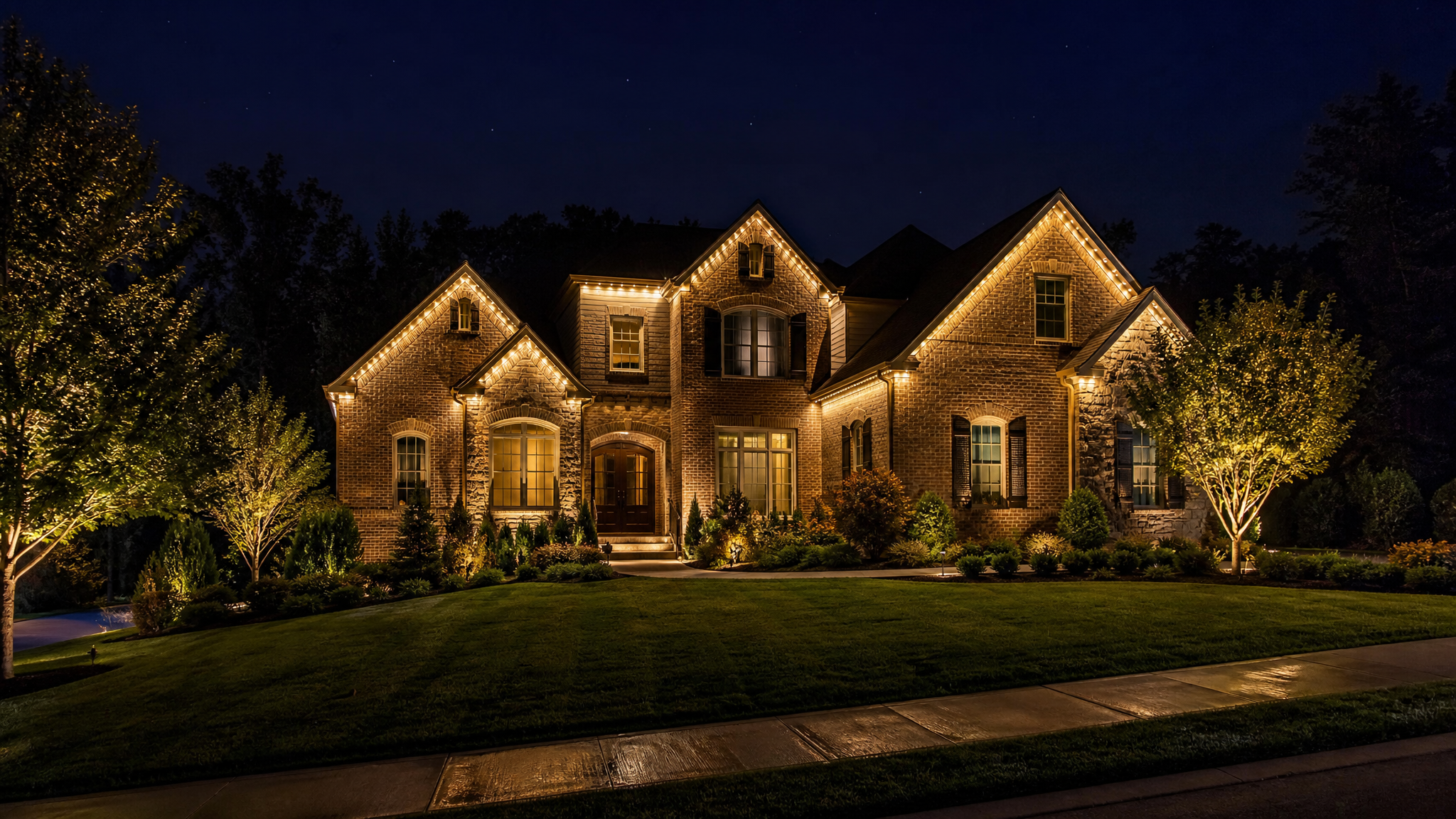
For a commercial property, September is the right month to book holiday lighting because the approval path is long, the install window is short, and in most Lighting Partners territories the commercial calendar fills before the residential one. Property managers who start in November are usually choosing from what is left, not from what they wanted.
The commercial calendar runs earlier than the residential one
Homeowners think of holiday lighting as a December purchase and most of them are still early enough if they book in early fall. Commercial properties do not have that margin. A commercial program has three clocks running at once: the property's internal approval clock, the franchise's install calendar, and the weather. Each one on its own would push the decision into September. Together they make it the only comfortable month.
Clock one: your own approval path
Most commercial lighting programs cannot be approved by one person on one phone call. An HOA needs a board vote, and boards meet monthly. A retail center needs the property manager to confirm what the lease allows and who pays, which sometimes means a call to the owner or the asset manager. A corporate campus needs procurement and a facilities sign-off. An office park may need a tenant notice. Each of those steps takes a week or more and they happen in sequence, not in parallel. A quote requested in the first week of September is usually approved by early October. The same quote requested in late October is often still unsigned in mid-November, when the crew is already fully committed.
Clock two: the install calendar
A Lighting Partners crew can install a fixed number of properties per week, and commercial properties take more of that capacity than homes. A shopping center is an after-hours job that may take several nights. An office campus with mature trees is a multi-day install. Because commercial jobs consume whole days and nights, franchises schedule them first and fit residential installs around them. That is good news for a property manager who books in September: the best windows are open. It is bad news for one who books in November: the whole-day blocks are gone, and what remains are gaps between residential jobs.
Clock three: the weather
In the cold-climate territories (Twin Cities, Michigan, Northeast Ohio, New England, Denver), roof and lift work gets harder once ice arrives. Franchises in those markets aim to have commercial installs finished before the first hard freeze. In milder markets like Phoenix and Virginia the window is longer, but the demand curve still peaks in October. Booking in September means the crew picks the install week around the forecast rather than around whatever day is left. Regional timing by market is covered at /blog/when-to-schedule-holiday-lighting-installation-by-region/.
What waiting actually costs
Waiting until November does not usually mean a property goes dark for the season. It usually means three compromises. First, a later lighting date than the property wanted, which matters most for retail centers whose tenants are counting on the lights for the shopping season. Second, a reduced design, because the crew is working from remaining inventory and a compressed schedule rather than a full design walk. Third, no multi-year lock, because the franchise cannot promise next year's window while it is scrambling to fill this one.
What booking in September secures
An early booking reserves a specific install week, a full site survey and design walk with the manager or board, first pick of product and format, a mid-season service commitment, a January takedown date that is already on the calendar, and the option of a multi-year program that holds all of the above for next season. The program structure by property type is at /commercial/holiday-lighting-packages/.
The property manager's September checklist
- Confirm what the lease or HOA covenants allow and who pays. The retail version is at /blog/commercial-holiday-lighting-retail-lease-checklist/.
- Find the Lighting Partners franchise that covers the property at /locations/.
- Request the quote at /get-a-quote/ with the property address, property type, and any approval dates (next board meeting, procurement cutoff).
- Walk the site with the franchise and approve the design.
- Sign, lock the install week, and put the takedown date on the calendar.
If it is already past September
Book anyway. Later is still better than not at all, and the local franchise will tell you honestly what windows remain. The point of this article is not that late booking is impossible. It is that the September booking gets the property what it actually wanted, and every month after that trades something away.