
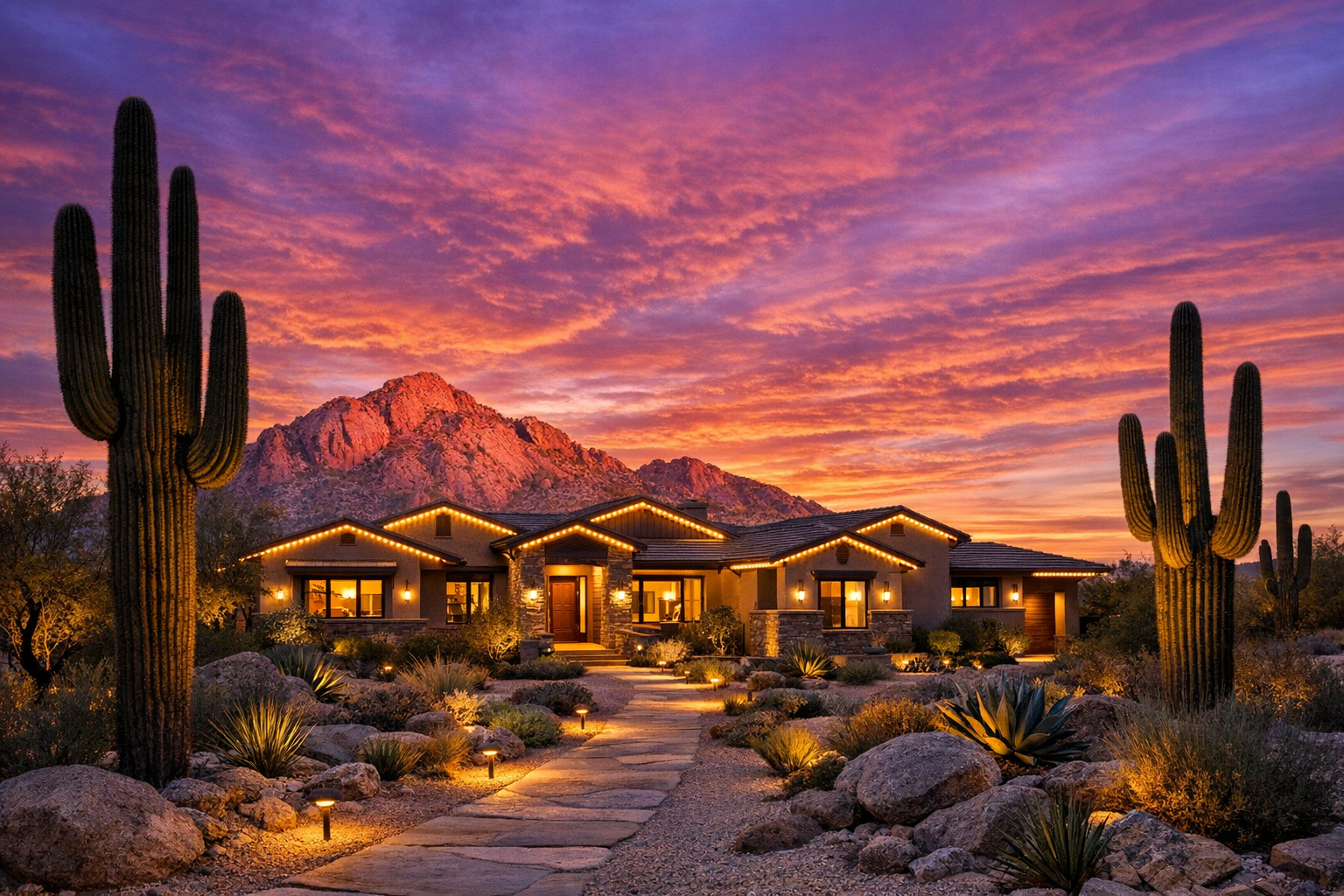
Holiday lighting installation cost is driven by four main variables. Linear footage of roofline. Bulb type and density. Tree wrap count. And whether you are paying for full service including takedown and storage or just an install.
The four variables that drive the budget
Linear footage is the single biggest factor. A 1,500 square foot single story ranch with a simple gable might have 80 to 120 linear feet of roofline. A 3,000 square foot two story colonial typically runs 150 to 250 linear feet. An estate property with multiple gables, dormers, and decorative trim can run 400 to 800 linear feet or more. The price scales roughly linearly with the footage, with a modest premium for complexity.
Bulb type and density set the visual statement. C9 bulbs are larger, brighter, and produce the classic strong roofline look most homeowners want. Mini LED bulbs are smaller, more flexible, and used for canopy wraps, tree trunk wraps, and tighter architectural detail. C9 bulbs cost more per linear foot than mini LEDs because the bulb itself is more expensive. Density refers to bulb spacing. Tighter spacing produces a more saturated look but uses more bulbs per linear foot.
Tree wraps add a separate line item. Each mature tree wrap typically runs in a price band based on tree size and wrap density. Canopy wraps on smaller ornamental trees are at the lower end. Tight trunk and branch wraps on tall mature trees are at the higher end. Tree wraps are often the visual element that fills out the property and makes the front yard read as a coordinated holiday presentation rather than a roofline alone.
Full service means the crew supplies the bulbs, installs them, takes them down in January, and stores them indoors until next year. Install only means the homeowner provides bulbs or buys them once and stores them. Most professional installers run full service as the standard offering because it produces the best long term experience and the cleanest takedown.
Typical budget bands by home size
Compact homes under 1,500 square feet with a simple roofline typically fall in a modest budget band. Modern two story homes with a more complex roofline fall in a higher band. Estate properties with multi gable rooflines, tree wraps on multiple mature trees, and landscape lighting fall in a substantially higher band. The franchise crew quotes the specific number based on the property review.
The variables that move a home up or down a band include roof access difficulty, pitch steepness, tree count and size, HOA coordination requirements, and any historic district approval process. A property with easy ladder access, a simple two gable roofline, and no tree wraps will quote at the lower end of its band. A property with steep multi gable roof, mature tree wraps, and a historic district approval requirement will quote at the higher end.
Why DIY math often underestimates the real cost
Many homeowners run DIY math by pricing big box bulbs and assuming the labor cost equals their own time. That math typically misses three real costs. First, commercial grade bulbs that survive multiple seasons cost three to five times what big box consumer lights cost. Second, professional clips that protect the roof system cost more than the plastic gutter clips sold in retail. Third, ladder time, takedown time, and storage space all carry a real opportunity cost.
A professional install also produces a different visual result. Custom cut strands that fit each roofline section, hidden wire routing, and intentional bulb spacing read as a clean architectural detail rather than a tangle of consumer holiday lights. Many homeowners discover after one DIY season that the time saved by hiring a professional is worth more than the apparent savings of DIY.
What the quote conversation actually covers
When you request a quote from a Lighting Partners franchise, the conversation typically covers the linear footage estimate, the bulb type and density preference, the tree wrap count, and the install window preference. Most franchises produce a custom quote based on a property review, often a site visit or a satellite estimate, rather than a fixed per home rate.
The quote is the right place to ask questions. Which bulb type fits your house style. Which clip pattern protects your specific roof material. Whether the install crew can route power to a hidden source. How takedown coordination works in January. The franchise crew is the local expert on all of these questions and will guide the design conversation toward a result that matches your priorities and your budget.
Where the budget is locked in
The budget is locked in by the install standard, not the negotiation. Professional installs use commercial grade bulbs, professional clips, and a consistent install discipline regardless of property size. The cost difference between a small and a large install is the labor and product scale, not a difference in install quality. That consistency is what makes the long term experience predictable. The same crew returns the next year, the same install plan applies, and the property looks the same in year five as it did in year one.
Many homeowners view the first year as the highest budget year because of the upfront product cost. Multi year contracts spread the product cost across multiple seasons and typically reduce the annual rate by 10 to 15 percent compared to single season installs. The multi year model also locks in pricing and guarantees the same crew returns each year.